
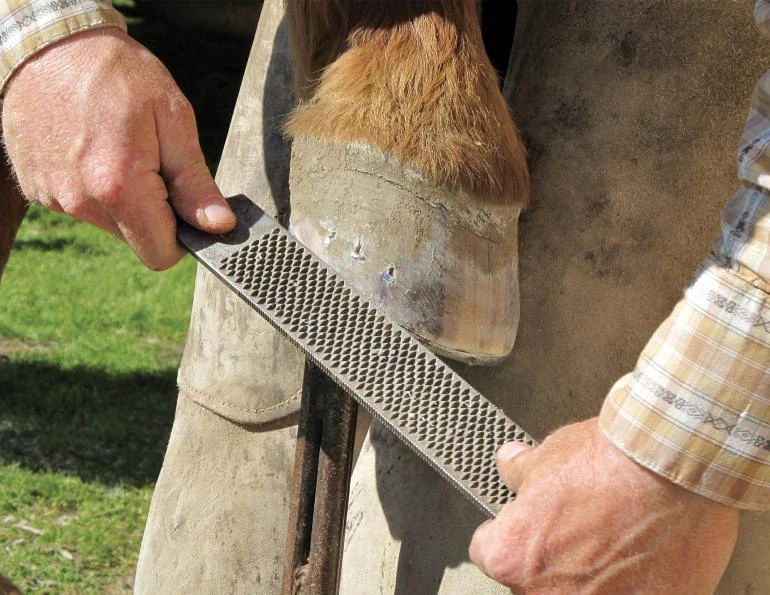
Make hoof care part of your regular routine: clean and inspect the feet, maintain suitable living conditions, and keep scheduled farrier visits. Ask your veterinarian or farrier about changes you notice.
Look closely, and learn what is normal
Regular handling helps you become familiar with your horse’s feet. Notice the appearance of each hoof and, where applicable, the position of the shoes. Changes are easier to explain when you know what you normally see.
Cleaning the hooves gives you an opportunity to look for trapped stones, damage, or anything unusual. If you are unsure about safe handling or hoof picking, ask an experienced professional to demonstrate.
Keep the environment in mind
Your horse’s daily surroundings matter. Review stall bedding, turnout conditions, and the surfaces your horse uses. Bring persistent wet or dry conditions into your conversation with the farrier, especially if you have noticed a change in the feet.
There is no universal product that makes environmental issues irrelevant. Before adding a hoof dressing or treatment, ask whether it is suitable for your horse and the concern you are seeing.
Keep routine appointments
Barefoot and shod horses both benefit from a planned care routine. Ask your farrier when to schedule the next visit and what changes should prompt an earlier call.
A busy week can easily become a missed appointment. Set a reminder, record the date of the last trim or shoeing, and raise any scheduling needs in advance.
Pay attention to shoes between visits
Check for a shoe that appears loose, shifted, or missing. If something has changed, describe it to your farrier. A clear photo may help explain what you are seeing, but it is not a substitute for assessment when the horse is uncomfortable.
Do not attempt to carry out corrective trimming or shoeing yourself. Ask what to do next and whether a visit is needed.
Discuss nutrition and products before making changes
A feeding plan should consider the whole horse. Ask your veterinarian or an equine nutrition professional before adding supplements. More is not automatically better, and a hoof concern does not by itself identify a nutritional deficiency.
Tell your care team what your horse currently eats and which supplements or topical products you already use. That gives them a clearer picture when making recommendations.
Keep your care team in the conversation
Share relevant veterinary recommendations, changes in workload, and new concerns with your farrier. Likewise, let your veterinarian know about hoof-care observations that may matter to a health assessment.
If your horse develops sudden lameness, significant pain, or an injury, seek veterinary advice promptly. A website guide cannot diagnose the cause.
Small observations can be useful.
Bring your questions to the next visit, or contact Tylor if something changes before then.
General educational information from Tylor James Farrier Service. Care should be individualized with your farrier and veterinarian.
Further reading: University of Minnesota Extension: Caring for your horse’s hooves.