
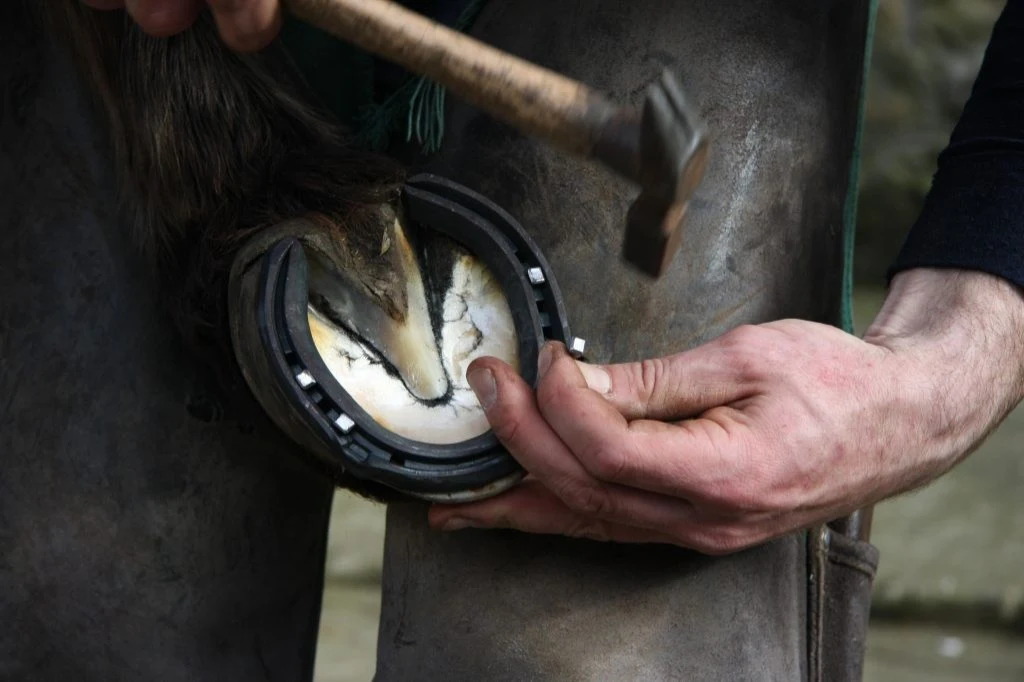
Many horses need routine hoof care about every six to eight weeks. Some need shorter intervals. Your farrier should set the schedule around growth, wear, workload, and any special care requirements.
The schedule starts with the horse
A recurring appointment is useful, but a calendar is only a starting point. Your horse’s hooves continue to grow between visits. Workload, living conditions, and seasonal changes can affect what you and your farrier need to watch.
The aim is to maintain a sensible care routine, rather than waiting until an obvious problem appears. Ask your farrier what interval is appropriate and what changes should prompt an earlier call.
Do barefoot horses still need a farrier?
Yes. Being barefoot does not mean being maintenance-free. A horse living in a pasture or stall may not naturally wear its hooves in a way that maintains suitable balance and shape.
Regular trimming and assessment remain part of barefoot care. Your farrier can consider wear patterns, the surfaces your horse encounters, and the work it is doing when recommending the next visit.
What about horses that wear shoes?
Shoeing schedules need to account for hoof growth as well as shoe wear. A shoe may appear to have life left in it while its fit needs attention. The farrier can decide whether a shoe can be reset or should be replaced.
If a shoe is loose, shifted, or missing, get in touch before the next scheduled visit. Share clear details about what happened and whether your horse seems uncomfortable.
What can change the timing?
- Hoof growth and condition. Growth and wear vary between horses and over time.
- Workload and footing. A change in activity or the surfaces your horse travels on may warrant a discussion.
- The current shoeing plan. Some specialty or therapeutic plans require closer follow-up.
- New concerns. Changes in comfort or movement should be assessed rather than left until a routine date.
Make the next visit easier
Keep a note of your last appointment and any changes you notice afterward. Share upcoming events, changes in work, or veterinary advice when discussing the next date.
For the visit itself, have your horse ready and provide a suitable, well-lit working area. If anything about handling or the environment has changed, let your farrier know in advance.
When not to wait
Sudden lameness, significant pain, injury, or other urgent concerns call for veterinary advice. Contact your farrier about shoeing or trimming concerns as appropriate, but do not use a routine appointment as a reason to delay urgent care.
Build a schedule you can maintain.
Call 706-669-8976 or send a service request with your horse’s current routine and barn location.
General educational information from Tylor James Farrier Service. Care should be individualized with your farrier and veterinarian.
Further reading: University of Minnesota Extension: Selecting a farrier for your horse.